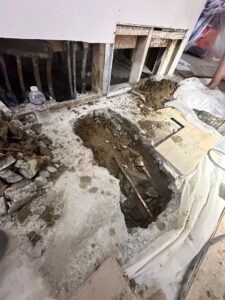
A slab leak is basically a plumbing nightmare that happens completely out of sight. It occurs when the freshwater pipes running underneath your home’s concrete foundation slab rupture, causing water to pool under your house. For homeowners in Llano, California (often spelled phonetically as Yano), this isn’t just a minor leak—it’s a slow-motion structural threat. If a house was built thirty, forty, or fifty years ago, its underground plumbing is likely hitting its expiration date. When dealing with underground line deterioration, foundational water damage, or complex pipe failure, Daniel Plumbing and Maintenance provides the expert plumbing repair in Llano, California, needed to handle the situation.
The Timeline: How a Slab Leak Spawns Under Your Floor
A slab leak doesn’t happen overnight; it is the result of decades of friction, chemistry, and physics working against your home’s infrastructure. Here is exactly how it breaks down from day one:
- The Vintage Choice of Material: Decades ago, home builders standardly used rigid copper piping or galvanized steel lines for the main water supply. They laid these metal lines directly on the dirt and poured a massive, heavy concrete foundation right over them.
- Thermal Expansion Friction: Every time someone in the house runs hot water, the metal pipe expands slightly from the heat. When the water stops, it cools and contracts. Over 20+ years, this constant, microscopic shifting causes the pipe to rub relentlessly against the rough concrete and gravel surrounding it.
- Internal Corrosion: At the same time, the chemistry of the water traveling inside the pipe is attacking the metal. Minerals naturally found in the local water trigger a process called electrochemical corrosion, creating tiny rust scales and pits along the inside walls of the copper.
- The Breakthrough: Eventually, the combination of internal chemical wear and external friction creates a microscopic pinhole leak. Under high water pressure, that pinhole widens, and hundreds of gallons of water begin shooting into the dirt beneath your house, washing away the soil that holds up the concrete foundation.
The Warning Signs: How to Spot the Disaster
Because the pipes are buried under inches of solid concrete, you can’t just see the water leaking. Instead, you have to look for the secondary symptoms of a failing foundation line:
- An unexplainable, sudden spike in your family’s monthly water bill.
- Mysteriously warm or damp spots on your bedroom or living room floorboards.
- The faint sound of rushing water behind the walls when all faucets are completely turned off.
- Cracks forming in the floor tiles or drywall as the house shifts into the washed-away soil.
Why a Whole-Home Repipe is the Only Real Fix
When an older home suffers a slab leak, jackhammering through the living room floor to patch that one specific section of pipe is rarely a smart move. If one part of the original copper line has corroded and failed, the rest of the underground pipe network is usually in the exact same brittle condition. Patching it just builds up pressure until the pipe bursts a few feet further down the line.
The definitive solution is a whole-home repipe. This process involves completely disconnecting and abandoning the old, decaying metal pipes beneath the concrete. In their place, plumbers run brand-new, highly durable, flexible PEX water lines through the walls and ceilings of your home. A repipe completely removes the risk of future foundation flooding, eliminates rust from your drinking water, and restores your home’s baseline water pressure.
How the Pros Fix It
Locating a hidden pipe burst under a concrete slab requires high-tech diagnostic gear. The licensed crew at Daniel Plumbing and Maintenance uses specialized electronic leak detection methods, including acoustic listening equipment and thermal imaging, to pinpoint the issue without destroying your house. Their technicians safely execute the repiping process to protect your home’s structural integrity, ensuring your plumbing system runs flawlessly for decades to come.